

Few entertainment brands have maintained the emotional power of Pokémon for as long as the franchise has. What began as a pair of video games in the 1990s has grown into a global cultural phenomenon spanning games, animation, trading cards, toys, clothing and countless collaborations.
Now, Pokémon is teaming up with another nostalgia-heavy brand: Polaroid. The result is a limited-edition collection of instant cameras, film and accessories designed around Pikachu, Sylveon and the iconic Poké Ball. Announced as part of Pokémon’s 30th-anniversary celebrations, the collaboration is about more than putting familiar characters on a camera. It demonstrates how companies can turn childhood memories into products that appeal directly to adults who grew up with those characters.
A Camera Designed to Trigger Nostalgia
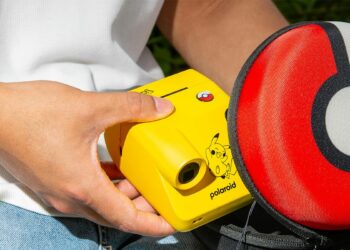
The new collection includes three special-edition cameras. The Polaroid Now Generation 3 gets a red, white and black Poké Ball-inspired design, while two Polaroid Go Generation 3 models take inspiration from Pikachu and Sylveon.
The Pikachu version uses the character’s familiar yellow colour scheme and includes a strap with a tail-inspired charm. The Sylveon edition uses pink, white and blue details. All three cameras feature shutter buttons designed to resemble Poké Balls.
On a practical level, these are functioning instant cameras rather than simple novelty toys. That distinction is important because the product is selling two things simultaneously: photography and nostalgia.
Why Pokémon Is Such a Powerful Marketing Tool
Pokémon has an unusually broad age range among its fans.
Someone who played Pokémon Red or Blue as a child in the late 1990s may now be an adult with disposable income. That person can experience the same emotional connection to Pikachu, Charmander or Bulbasaur while buying products designed for adult consumers.
This is the fundamental strength of nostalgia marketing. A company does not have to convince customers that an unfamiliar product is exciting. It can connect the product to something customers already love.
The emotional equation is simple: childhood memory plus a useful or collectible object can create a powerful purchasing motivation.
Polaroid Has Its Own Nostalgia Advantage
The partnership works because Polaroid also carries nostalgic value.
Instant photography has existed for decades, and the physical photograph creates an experience that differs from taking a picture on a smartphone. Instead of taking dozens of shots, checking a screen and immediately sharing the image online, instant photography creates a physical object that exists outside the phone.
Polaroid itself has leaned into this analog appeal as it has rebuilt the instant-photography category. The company says its Pokémon collaboration is intended to encourage both younger and older fans to embrace the tactile experience of instant photography.
That makes Pokémon and Polaroid a natural combination: one brand sells memories from childhood, while the other sells a physical way of creating and preserving new memories.
The Pokémon Snap Connection
There is another clever layer to the concept: photography has already been part of the Pokémon universe.
The Pokémon Snap games allowed players to photograph Pokémon in their natural environments rather than simply battling or collecting them. The Polaroid collaboration therefore gives fans a real-world way to play with the idea of being a Pokémon photographer.
While the new cameras do not literally turn the world into Pokémon Snap, the thematic connection makes the collaboration feel more meaningful than simply adding Pikachu artwork to a consumer product.
It Is More Than Just a Camera
Polaroid and Pokémon are not stopping with the camera bodies.
The collection includes Pokémon-themed instant film featuring characters and motifs such as Pikachu, Charmander, Bulbasaur, Squirtle, Gengar and others. The protective darkslides used with the film also contain Pokémon silhouettes, turning even packaging elements into potential collectibles.
There are also accessories, including a Poké Ball-inspired camera case, straps and a photo album.
This creates what is effectively a small ecosystem around the collaboration. A customer who buys the camera can then purchase themed film and accessories, giving the partnership additional opportunities to generate revenue.
The Business of Collectibility
Limited editions are particularly effective when a product combines utility with collectibility.
A traditional collectible may sit on a shelf. A Pokémon Polaroid camera can sit on a shelf, but it can also be used to create photographs.
That gives the product two identities. It is both merchandise and a functional device.
The approach can also encourage customers to build collections. Someone might start with the Pikachu camera and later become interested in themed film, a case or another accessory.
For brands, this is valuable because the customer relationship does not necessarily end when the original product is purchased.
Why Adults Are the Target Too
It would be easy to assume that brightly coloured Pokémon products are aimed primarily at children. But the economics of modern nostalgia often point toward adults.
Adults who grew up with Pokémon now have their own purchasing power. They may be willing to spend money on products that remind them of childhood, particularly when those products are sophisticated enough to feel appropriate for adult hobbies.
The Pokémon Polaroid collection is a good example of this strategy. The products preserve the playful visual language of Pokémon while being built around an established photography product.
It is not simply saying, “Here is a children’s Pokémon toy.” It is saying, “Here is a real camera for someone who happens to love Pokémon.”
The Bigger Analog Photography Trend
The collaboration also arrives during renewed interest in analog and deliberately imperfect photography.
Smartphones have made photography almost frictionless. People can take hundreds of photographs without thinking about the cost of each individual image.
Instant photography works differently. Film is limited, each exposure has a cost, and the final photograph becomes a physical object.
That limitation can actually be part of the appeal. It encourages people to slow down and think about the photograph they want to capture. The resurgence of instant cameras has been linked to a broader interest in tactile photography and alternatives to heavily digital experiences.
Turning Memories Into New Memories
This may be the smartest part of the collaboration.
Nostalgia products often sell the memory of the past. A Pokémon figurine reminds someone of a childhood bedroom. A retro game recreates an old gaming experience.
The Polaroid collaboration goes a step further. It uses nostalgia to help people create new memories.
A Pokémon fan can take the camera to a birthday party, vacation, wedding or gathering with friends. The resulting photograph becomes a new physical memory connected to an old emotional one.
The product therefore does not simply say, “Remember when you were a kid?”
It says, “You can bring some of that feeling into your life now.”
The Limited-Edition Strategy
The collection is being released in limited quantities, increasing its appeal to collectors. Polaroid announced that pre-orders would open on August 25, 2026, with the collection scheduled for a broader release in October. Prices start at $99.99 for the Go models, while the Now Generation 3 Pokémon edition is priced at $139.99 in the United States.
Limited availability can create urgency, particularly when a product combines two globally recognizable brands.
For collectors, scarcity adds another reason to buy early.
Why Brand Collaborations Work
The Polaroid-Pokémon partnership demonstrates the strength of complementary brands.
Polaroid brings photography, analog culture and physical memories. Pokémon brings characters, fandom and decades of emotional attachment.
Neither company has to build that emotional connection from scratch.
When two established brands combine their existing audiences, the resulting product can feel simultaneously familiar and new.
Final Thoughts
The Pokémon Polaroid camera is interesting not simply because it is a themed instant camera, but because it represents a larger business strategy.
Companies increasingly understand that nostalgia can be monetized when it is connected to products that fit modern lifestyles. Adults who grew up with Pokémon are now consumers with money, hobbies and an appetite for products that remind them of earlier stages of their lives.
Polaroid adds another emotional layer by offering a tactile alternative to smartphone photography.
The result is a product that sells a camera, film and accessories—but also sells something much harder to manufacture: the feeling of being a kid again, while still having the freedom and purchasing power of an adult.
That may be the real business behind nostalgia. The best nostalgia products do not merely recreate the past. They give people a reason to take that feeling with them into the present.